Birds, Squirrels, and Nests in Your Chimney
A chimney looks like an ideal den to a bird or squirrel, and the result can be a blocked flue you won't know about until you light a fire.
October 20, 2026 · 4 min read
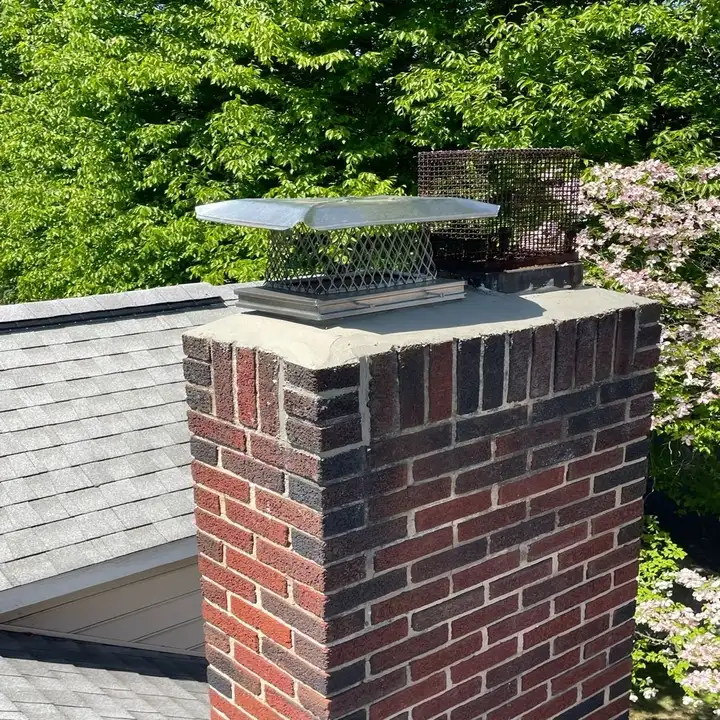
To a bird or a squirrel, a chimney is a sheltered, vertical, hollow space with a rough interior and a roof over its head. It's close to perfect. Spring and early summer are common nesting times, and an open flue can fill with twigs, leaves, and fur while the fireplace sits unused. Then the weather turns cold, someone lights a fire, and the first thing the house learns is that the chimney isn't clear. Here's what these blockages do, how to spot them, and how to keep them from coming back.
Why is a blocked chimney a safety problem?
A chimney only works if the exhaust has a clear path out. When a nest, a pile of leaves, or a fallen animal fills the flue, the smoke and gases from your fire or furnace have nowhere to go. They back up and enter the house. Carbon monoxide, which is odorless and invisible, is part of that exhaust, and it's the reason a blockage is more than an annoyance. Smoke in the room is the visible symptom. The gas you can't see is the part to worry about.
There's a fire concern too. Nesting material such as dry grass, twigs, and leaves is combustible, and it sits directly in the path of hot gases and sparks. Add a layer of creosote underneath, and you have fuel stacked inside a structure designed to carry fire safely. The chimney was never meant to burn through a bird's nest on its way out.
Signs there's something in your flue
Animals rarely announce themselves in a useful way, but the clues are usually there:
- Scratching, scrabbling, or chirping from the fireplace, especially in the morning or evening
- Twigs, leaves, feathers, or clumps of nesting material on the damper or in the firebox
- A foul odor, which can mean an animal has died in the flue
- Smoke backing into the room when you light a fire
- A draft that has gotten noticeably weaker with no other explanation
If you notice any of these, don't light a fire to "smoke them out." That approach traps smoke in your home, can harm the animal, and can ignite the nest. Leave the damper alone, keep pets and children away from the fireplace, and call a professional.
How are nests and animals safely removed?
Removal starts with finding out what you're dealing with. A sweep looks into the flue from the firebox and from the top, and a camera helps when the blockage isn't visible from either end. A nest of loose twigs near the top is a different job from a packed mass of debris deeper down, and a live animal calls for a different approach than an empty nest.
Once the obstruction is cleared, the work isn't finished. The flue still needs to be swept, because debris and the droppings and material around it leave residue behind. The sweep should also check what the animal may have damaged: a bent damper, a displaced cap, or a flue liner that was disturbed while something was forcing its way in or out. Clearing the blockage and ignoring the damage is how a problem returns the following year.
Chimney caps and mesh: the lasting fix
The reliable way to keep animals out is to keep them from entering. A chimney cap with mesh sides covers the flue opening so birds, squirrels, and raccoons can't get in, while the mesh still lets exhaust escape. The cap also keeps rain and snow from dropping straight down the flue, which cuts down on moisture inside the system, and it can catch sparks before they land on a shingle roof.
Material matters. A stainless steel mesh cap stands up to weather and to animals that try to chew or pry at it. A cap that's loose, bent, or missing pieces isn't doing its job, so a cap that has been on the chimney for years deserves a look during every inspection. When a sweep visits and finds the cap damaged, replacing it is straightforward compared with repeated removal visits.
A cap and a crown work as a pair. The cap keeps things out of the flue, and the crown keeps water out of the masonry beneath it. If your chimney has neither in good shape, it's open to both weather and wildlife.
Don't forget the other vents
Gas fireplaces, furnaces, and water heaters often vent through a chimney too, and a blocked flue is just as serious when it serves one of those appliances. If a gas appliance vents through your chimney, it deserves the same annual check as a wood fireplace. The exhaust still needs a clear path out.
Chimney Sweep Systems, Inc. offers bird, squirrel, and nest removal, and installs chimney caps, for homeowners in Cumberland, Adams, Perry, Franklin, and Dauphin Counties. If you hear something in the flue or smell something that shouldn't be there, call the Carlisle office at 717-601-2595.
Chimney Sweep Systems, Inc., 717-601-2595
Call 717-601-2595More articles
When Should You Have Your Chimney Swept?
Annual sweeping is the baseline, and a handful of warning signs mean you shouldn't wait for the calendar.
Chimney Inspection Levels Explained: Level I, II, and III
Three inspection levels exist for good reason, and knowing which one you need can keep you from paying for too little or too much.