Chimney Inspection Levels Explained: Level I, II, and III
Three inspection levels exist for good reason, and knowing which one you need can keep you from paying for too little or too much.
October 20, 2026 · 4 min read
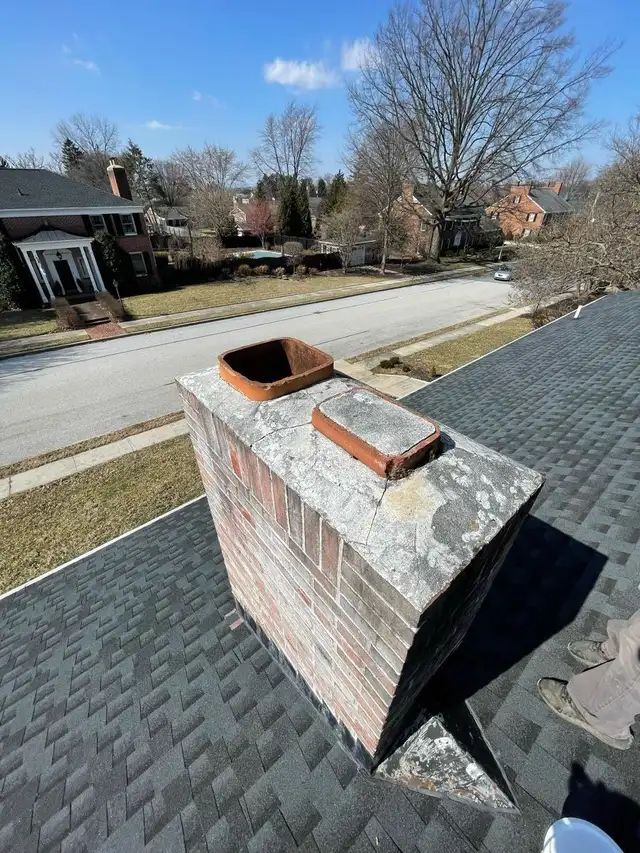
Ask three homeowners what a chimney inspection is and you'll hear three different answers. One thinks it's the quick look that comes with a yearly sweeping. Another remembers a camera being lowered down the flue before they bought their house. A third has never had one. They're all partly right, because there isn't one kind of chimney inspection. There are three, defined in NFPA 211, the national standard covering chimneys, fireplaces, vents, and solid fuel burning appliances. The Chimney Safety Institute of America (CSIA) uses the same three levels. Which one applies depends on what is happening with your home and your heating system.
What does a Level I inspection cover?
Level I is the routine, annual inspection. It applies when you're using your system the way you always have: same appliance, same fuel, no changes, and no reason to suspect a problem. The inspector examines the parts of the chimney that are readily accessible, meaning what can be seen from the firebox, the exterior, and the accessible portions of the flue and the connection between appliance and chimney. The goal is to confirm that the chimney is free of obstructions and combustible deposits like creosote, and that its basic condition is sound.
In practice, Level I happens during an annual sweeping. The sweep is already in the firebox and looking up the flue, so checking the damper, the smoke chamber, the visible masonry, and the cap goes hand in hand with the cleaning. A Level I inspection also covers a like-for-like appliance swap, for example replacing a wood stove with a similar wood stove connected to the same flue.
What Level I doesn't do is go into concealed areas. It won't tell you what the flue looks like behind a wall or in the attic, and it isn't built to find a hidden crack in a liner. For a system that has been behaving normally, that's usually fine. When something has changed, you need more.
When does a Level II inspection apply?
Level II is a deeper look, and it's triggered by change or doubt. It includes everything in Level I plus the accessible areas in attics, crawl spaces, and basements, and it normally includes a video scan of the flue's interior so the inspector can actually see the condition of the liner from top to bottom. Situations that call for Level II include:
- Changing the system, such as installing a new appliance or switching fuel types
- A real estate transaction, on either side of the sale
- Before relining a flue, so the inspector knows exactly what's being replaced and why
- After a malfunction, or after an event that could have damaged the chimney
Why real estate transactions call for Level II
Buying a home is a large commitment, and the chimney is one of the few major systems that a standard home inspection can't fully evaluate. A flue lined with clay tile can look perfectly good from the firebox while hiding cracked tiles or missing mortar joints further up. Those defects let heat and combustion gases reach the surrounding structure, and a Level I look would never catch them.
A Level II inspection gives the buyer a documented picture before closing. It also helps sellers: if a problem is found, they can choose whether to repair it, price around it, or disclose it, instead of being surprised by a buyer's inspector at the last minute. If you're in a transaction anywhere in Cumberland, Adams, Perry, Franklin, or Dauphin County and the house has a fireplace, a wood stove, or an older furnace flue, ask about a Level II early in the process, since scheduling and any follow-up repairs take time.
What is a Level III inspection?
Level III is the most intensive of the three, and most homeowners will never need one. It's reserved for the case where a Level I or Level II inspection suggests a serious hazard that can't be evaluated any other way. It includes everything in the first two levels, plus examination of concealed areas of the chimney and building. That can mean removing parts of the chimney or building, such as a section of masonry, a wall finish, or a crown, so the inspector can see what's behind it.
Because it can be invasive, Level III is a tool for answering a specific question: what is actually going on behind this surface, and how bad is it? It isn't something to schedule on a whim. If a Level II scan finds a defect that raises that kind of question, your inspector will explain why a Level III is warranted and what would need to be opened up.
Which level do you need?
A simple rule of thumb: if nothing has changed and nothing seems wrong, Level I with your annual sweeping. If something has changed, or something seems wrong, or the home is changing hands, Level II. If a Level I or II raises a red flag that can't be assessed without opening things up, Level III.
It also helps to tell your sweep why you're calling. "I'm buying this house" and "my stove's draft has gotten weak" lead to different inspections, and giving that context up front keeps you from paying for a visit that doesn't answer your actual question.
Chimney Sweep Systems, Inc. performs chimney cleanings and inspections, including inspections for real estate transactions, for homeowners across South Central Pennsylvania. The office is at 1526 Newville Rd in Carlisle. If you're not sure which level fits your situation, call 717-601-2595 and describe what's going on.
Chimney Sweep Systems, Inc., 717-601-2595
Call 717-601-2595More articles
When Should You Have Your Chimney Swept?
Annual sweeping is the baseline, and a handful of warning signs mean you shouldn't wait for the calendar.
Stainless Steel vs. Aluminum Chimney Liners
The liner is the part of your chimney you can't see and the part that matters most, so the material you choose should match what you burn.