Chimney Crowns, Freeze-Thaw Damage, and Repointing
Water is the slowest and most patient enemy of a masonry chimney, and Pennsylvania winters give it plenty of chances.
October 20, 2026 · 4 min read
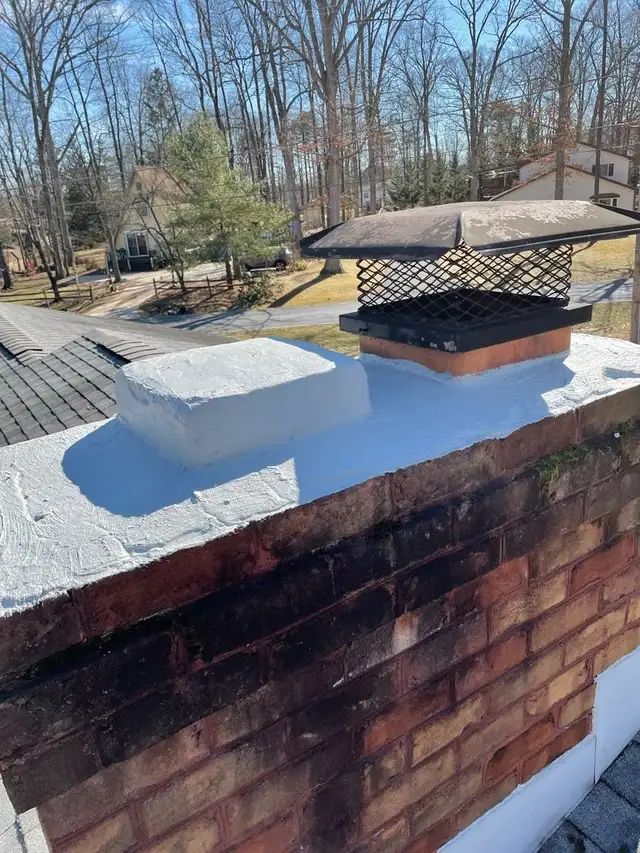
A brick chimney looks permanent, which is why so many homeowners ignore it for decades. But a masonry chimney is exposed to more weather than any other part of the house. It sits at the highest point of the roof, takes the wind and rain from every direction, and gets no shelter from the elements. Water is the main reason chimneys deteriorate, and it gets in through two places more than any other: the crown at the top and the mortar joints in the brick. Here's how that damage happens and what fixes it.
What is a chimney crown, and how is it different from a cap?
The crown is the slab that seals the top of the chimney structure. It surrounds the flue tile, extends past the edges of the brick, and slopes outward so rain and snowmelt run off instead of soaking in. A well-built crown protects everything below it. The cap is a different part: the metal covering that sits over the flue opening to keep rain, debris, and animals out. People mix up the two, but the crown guards the masonry and the cap guards the flue.
Crowns are often made from mortar or poured concrete, and many were built thin or flat. Others were simply a smear of mortar around the tile. Over time, those shortcuts show up as cracks, crumbling edges, and surfaces that hold water instead of shedding it.
How do crowns crack in the first place?
Cracks come from several causes working together. Mortar and concrete shrink slightly as they cure, which can start hairline cracks early on. The chimney then expands and contracts through every temperature swing, heating when the fireplace is in use and cooling off in the cold. A crown without an overhang or without a proper slope lets water sit on its surface. Once that water finds even a hairline crack, it's headed inside.
A cracked crown is easy to dismiss because it looks minor from the ground. You usually can't see it from the yard at all. But a crack that admits water is the start of a longer problem, because that water doesn't stay put.
What does freeze-thaw do to brick and mortar?
Water expands when it freezes, by roughly nine percent. Inside a tiny crack or the pores of a brick, that expansion presses outward on the surrounding material with considerable force. Then it thaws, the water drains deeper, and the next freeze pushes again. Pennsylvania winters cross the freezing point many times between December and March, which means a single season can run a chimney through dozens of these cycles.
The results are visible if you know what to look for:
- Spalling, where the face of a brick flakes or peels away
- Mortar joints that are sandy, recessed, or crumbling
- White, chalky deposits on the brick, a sign that moisture is moving through the masonry
- Bricks that have shifted or loosened near the top of the stack
- Water stains on ceilings or walls near the chimney
Each of these tells you water has been getting in for a while. The longer the cycle runs, the more material is lost, and what started as a coating job becomes a rebuild.
Crown repair: seal it before it fails
How a crown is repaired depends on how far the damage has gone. If the crown is sound but has hairline cracks, a waterproof crown coating can seal the surface and stop water entry. If sections are crumbling or missing, the damaged material needs to be removed and the crown rebuilt with a proper slope and overhang so water sheds the way it should. Either way, the point is the same: the top of the chimney has to shed water instead of absorbing it. Crown repairs are best done before winter, while the weather lets materials cure properly.
Repointing: replacing failed mortar the right way
Repointing means removing deteriorated mortar from the joints and packing in fresh mortar. The key word is removing. Smearing new mortar over a failing joint doesn't last, because it has nothing sound to bond to. Done properly, the old material is cut out to a workable depth and the joints are refilled so they're solid and weather-tight. The mortar should also be suited to the brick. Older brick is often softer, and mortar that is much harder than the brick can pull the faces off the bricks over time.
Waterproofing as the finishing step
Once the crown and joints are sound, waterproofing treats the brick itself. A vapor-permeable water repellent lets the masonry shed rain while still allowing trapped moisture to escape. That breathability matters. A coating that seals moisture inside can cause the same freeze-thaw damage you were trying to prevent. Waterproofing is a way to extend the life of good masonry, not a cover-up for bad masonry, so it comes last, after repairs.
Chimney Sweep Systems, Inc. handles crown repairs, repointing and masonry repairs, and waterproofing for homeowners across South Central Pennsylvania. If you've spotted crumbling mortar, a cracked crown, or stains near your chimney, call the Carlisle office at 717-601-2595 and have it looked at before the next freeze.
Chimney Sweep Systems, Inc., 717-601-2595
Call 717-601-2595More articles
When Should You Have Your Chimney Swept?
Annual sweeping is the baseline, and a handful of warning signs mean you shouldn't wait for the calendar.
Chimney Inspection Levels Explained: Level I, II, and III
Three inspection levels exist for good reason, and knowing which one you need can keep you from paying for too little or too much.